
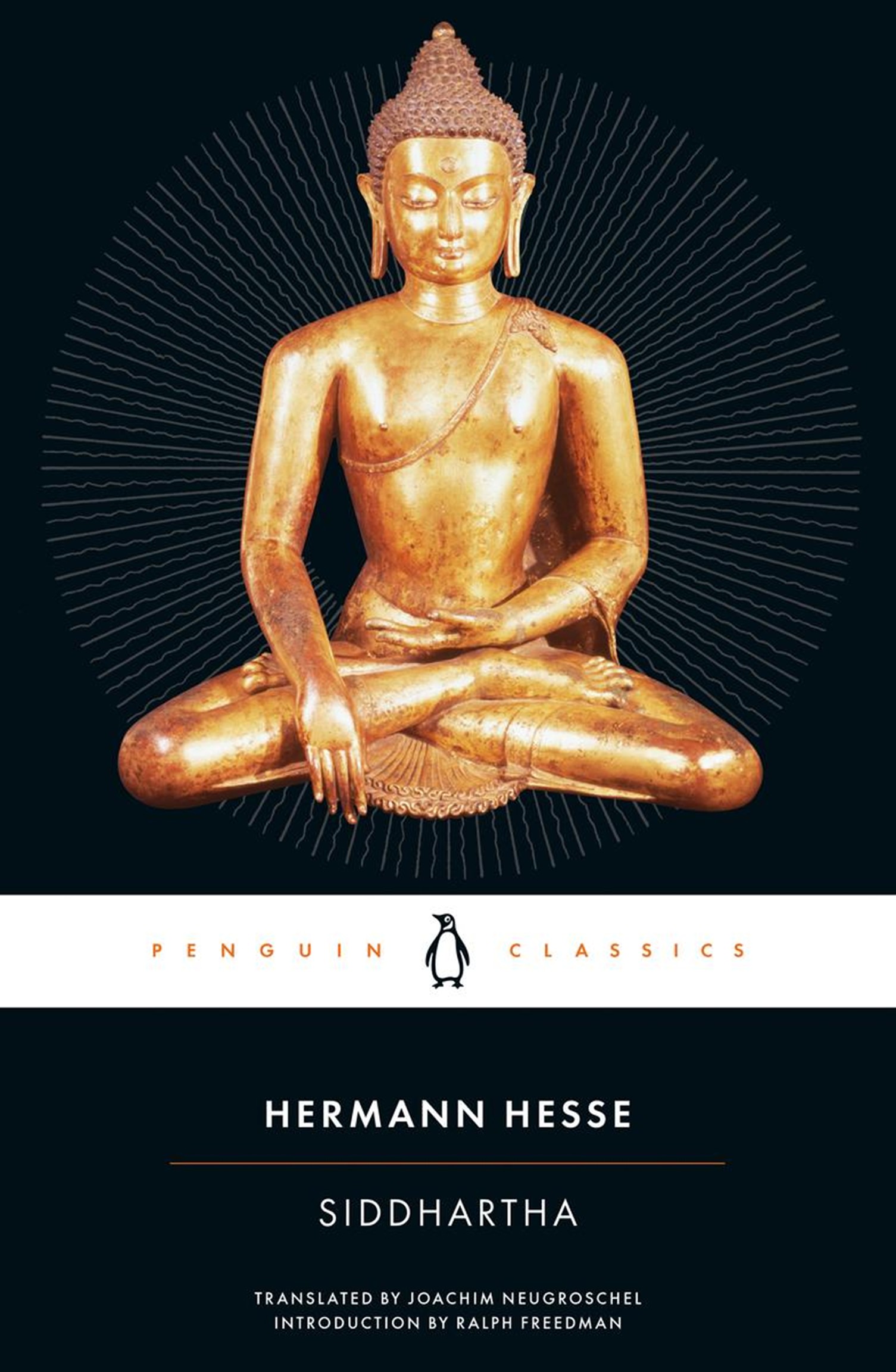
Siddhartha is not merely a book to be read; it is an experience to be gradually embraced. Set in ancient India during the time of the Buddha, the novel follows a fictional seeker whose path unfolds alongside, but never fully within, established spiritual traditions. Hermann Hesse crafts a story that reflects the quiet, persistent human longing for meaning beyond doctrine.
Siddhartha moves through many life stages: an ascetic, a disciple, a lover, a merchant, and finally truth holder. Each stage offers insight, yet none claim completeness. At the heart of the novel lies a simple but radical idea: wisdom cannot be inherited or transferred. Siddhartha contemplates, “Wisdom cannot be conveyed.” Wisdom that a wise man attempts to impart always sounds like foolishness to someone else.” This belief shapes his decision to respect the Buddha deeply while still choosing a solitary path of experience.
Siddhartha also echoes a wider tradition of spiritual journey narratives across cultures, from Ibn Tufail’s Hayy ibn Yaqdhan (حي بن يقظان) in Arabic, where truth is discovered through reflection, to Attar of Nishapur’s The Conference of the Birds (منطق الطير) in Persian, where the search for the divine ultimately turns inward.
Philosophically, Siddhartha critiques the contemporary tendency to pursue truth through the accumulation of knowledge, practices, or associations. Hesse suggests that understanding arises not from adding more, but from shedding illusions of certainty. The narrative gently challenges binary thinking: sacred versus worldly, reason versus faith, renunciation versus involvement. Instead, it shows life as a continuous movement in which contradiction itself becomes significant. Truth, in this view, is neither set or definitive, but relational, formed by time, experience, and attentiveness to the present moment.
Hesse’s prose is restrained yet resonant. Rivers communicate nonverbally, quiet serves as guidance, and time discloses what certainty cannot ascertain. The novel neither advocates for belief nor dismisses it; rather, it encourages patience, receptivity, and humility. Siddhartha ultimately suggests that understanding emerges not from choosing sides, but from remaining open to difference. In a world anxious for answers, it offers something quieter and enduring: trust in the slow blossoming of wisdom.
Written by Munazzah Naseer
Cohort II, Red Global